How Gulf Coast Humidity Affects Your Commercial HVAC System in 2026
Gulf Coast humidity shapes how commercial HVAC systems age, perform, and ultimately fail, and businesses in Mobile, AL, face some of the most demanding conditions on the entire Gulf Coast. This article explains how the coastal moisture environment accelerates system wear, what warning signs matter most, and why commercial
HVAC repair maintenance in Mobile, AL
requires a different cadence than the national standard. Facilities that delay often pay far more when components fail under peak summer load.
Why Mobile's Humidity Is Harder on Commercial HVAC Than Most Cities
Mobile sits near Mobile Bay and the broader Gulf of Mexico coast, creating a relentless moisture load. Data from the National Weather Service's Mobile/Pensacola forecast office shows average relative humidity holding above 70% for most of the year, with summer afternoons frequently pushing past 85%. Dewpoints can hover around 80°F for six months straight, day and night. That is not a seasonal spike; it is a near-constant condition.
Commercial systems in Mobile work far harder than counterparts in drier markets like Atlanta or Nashville. During peak summer, humidity forces units into nearly continuous operation to combat the influx of moisture from outdoors. Restaurants along Dauphin Street, hospitals near the University of South Alabama Medical Center, and warehouses close to the Port of Mobile all feel this pressure every summer. Proactive commercial HVAC repair maintenance in Mobile, AL, is what separates facilities that stay operational from those that face unexpected shutdowns at the worst possible time.
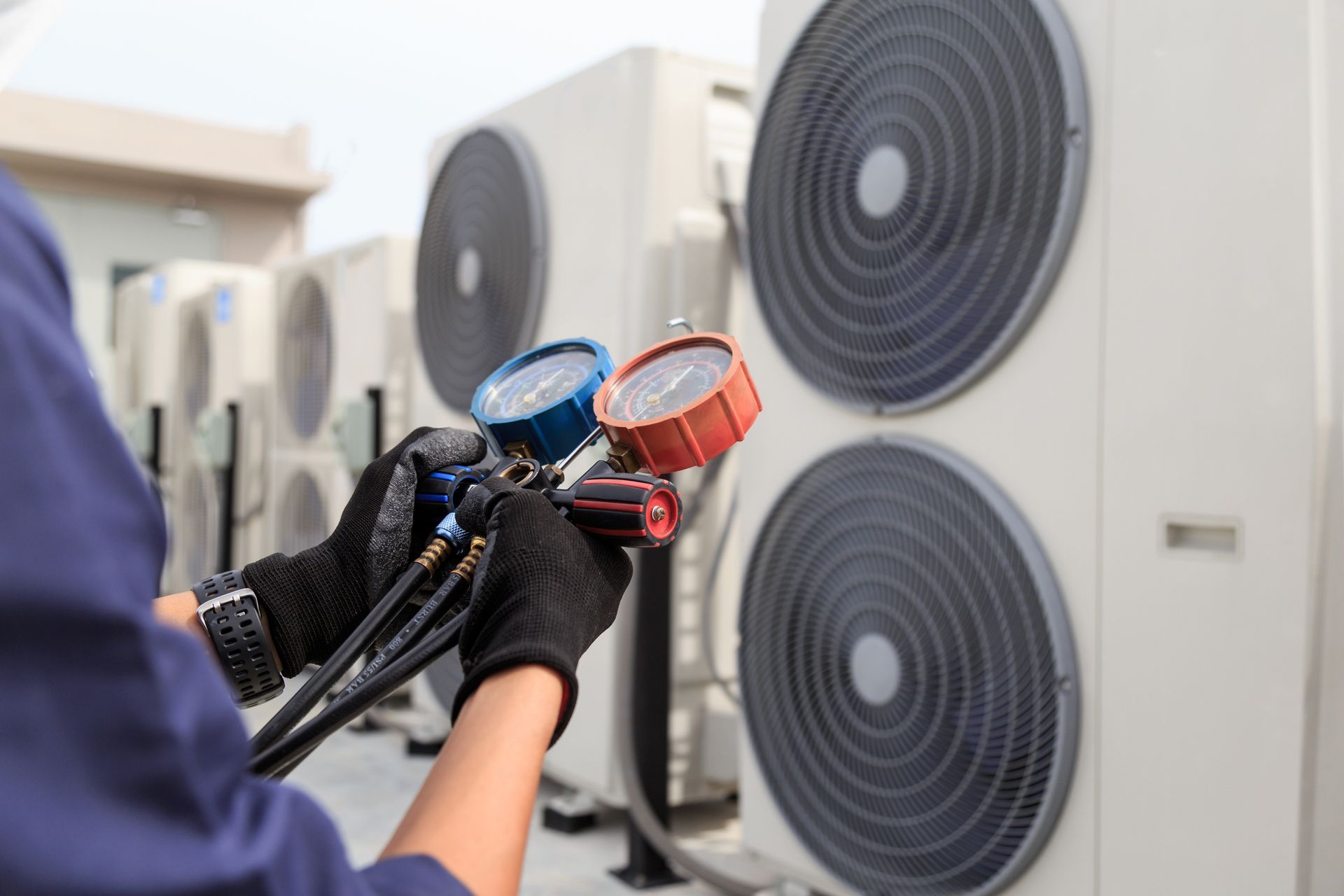
How Humidity Damages Commercial HVAC Components
High moisture degrades specific components in predictable ways. Understanding those failure points helps facility managers prioritize service intervals.
Coil Corrosion and Evaporator Saturation
Proximity to saltwater along Mobile Bay adds a corrosion layer on top of ordinary humidity stress. Evaporator and condenser coils are especially vulnerable. When humidity peaks, the thin layer of water on evaporator coils can act as an insulator, making it harder for the refrigerant to absorb heat. That insulating effect forces the compressor into longer cycles, driving up energy use and wear at the same time.
Condensate Drain and Mold Risk
Saturated air loads the condensate system heavily throughout Mobile's long humid season. If drain lines are not clear, backups trigger safety float switches and shut the system down entirely. Standing moisture inside ductwork and drain pans creates ideal conditions for biological growth, leading to air quality complaints, potential health code concerns, and higher liability risk. Routine commercial HVAC repair maintenance in Mobile, AL, keeps condensate systems clear and reduces that biological risk.
Compressor and Motor Strain
Compressors, blower motors, and coils experience greater stress when systems must continuously remove excess moisture from the air. In Mobile's climate, shortened equipment lifespan can arrive years ahead of manufacturer projections when maintenance intervals follow national averages rather than Gulf Coast realities.
Warning Signs That Gulf Coast Humidity Is Winning
Catching problems early is far less costly than an emergency shutdown during August in Mobile, AL. Watch for these signals:
- Musty or damp odors from supply vents, which may indicate microbial growth inside the air handler or ductwork.
- Visible mold around vents and inconsistent cooling, both suggesting the system is struggling to manage excess moisture.
- Rooms that feel cool but clammy, a sign the unit is meeting temperature targets while failing on dehumidification.
- Drain pan overflow or water staining near the air handler, indicating a blocked condensate line.
- More frequent refrigerant loss than expected, which can result from corrosion damage at coil connections in coastal air.
If any of these appear, scheduling commercial HVAC repair maintenance in Mobile, AL, is overdue rather than optional.
Maintenance Intervals for Mobile, AL, Versus National Averages
Most national guidelines suggest semi-annual commercial maintenance: one visit in spring, one in fall. That baseline may be adequate in Denver or Phoenix. It is typically not enough in Mobile.
Local commercial facilities should consider quarterly inspections at minimum, with coil cleaning and condensate line flushing performed more frequently during the May through October humid season. A preventive maintenance contract tailored to Mobile's climate can offset the accelerated wear Gulf Coast conditions impose on refrigerant circuits, drain systems, and mechanical components.
What Does a Preventive Maintenance Contract Cover?
A well-structured plan for a Mobile facility may include coil cleaning, condensate drain treatment, refrigerant level checks, blower motor inspection, thermostat calibration, and filter changes on a schedule that matches actual moisture loads rather than a generic national template. Covered equipment can include rooftop units, packaged systems, make-up air units, split systems, and multi-zone equipment.
Is Preventive Maintenance Worth the Cost in Mobile?
Preventive contracts typically cost far less than the unplanned repairs they prevent. Without regular maintenance, minor issues escalate into costly repairs, energy costs rise, breakdowns become more frequent, and equipment fails ahead of schedule. In a city where summer heat and humidity persist from May through October, that risk window is very long.
Partner With a Gulf Coast-Experienced Team to Protect Your System
Alston Refrigeration Co, Inc. has been serving Mobile and Baldwin counties since 1978, providing commercial HVAC repair maintenance to restaurants, hospitals, schools, and commercial facilities that cannot afford downtime in the Alabama summer.
Call
(251) 666-6644 to request a maintenance plan built for Mobile's humidity, not a national average. You can also
contact the team online to schedule a system assessment or ask about a preventive maintenance contract.